AI collaboration case study · Active private beta
Independent product · 2026
The Chosen Quest
Rebuilding a classroom RPG into a cohesive desktop experience. A human-directed, AI-assisted redesign spanning gameplay systems, interface design, visual quality control, testing, and release preparation.
01 / Overview
A visual refresh became a connected product effort.
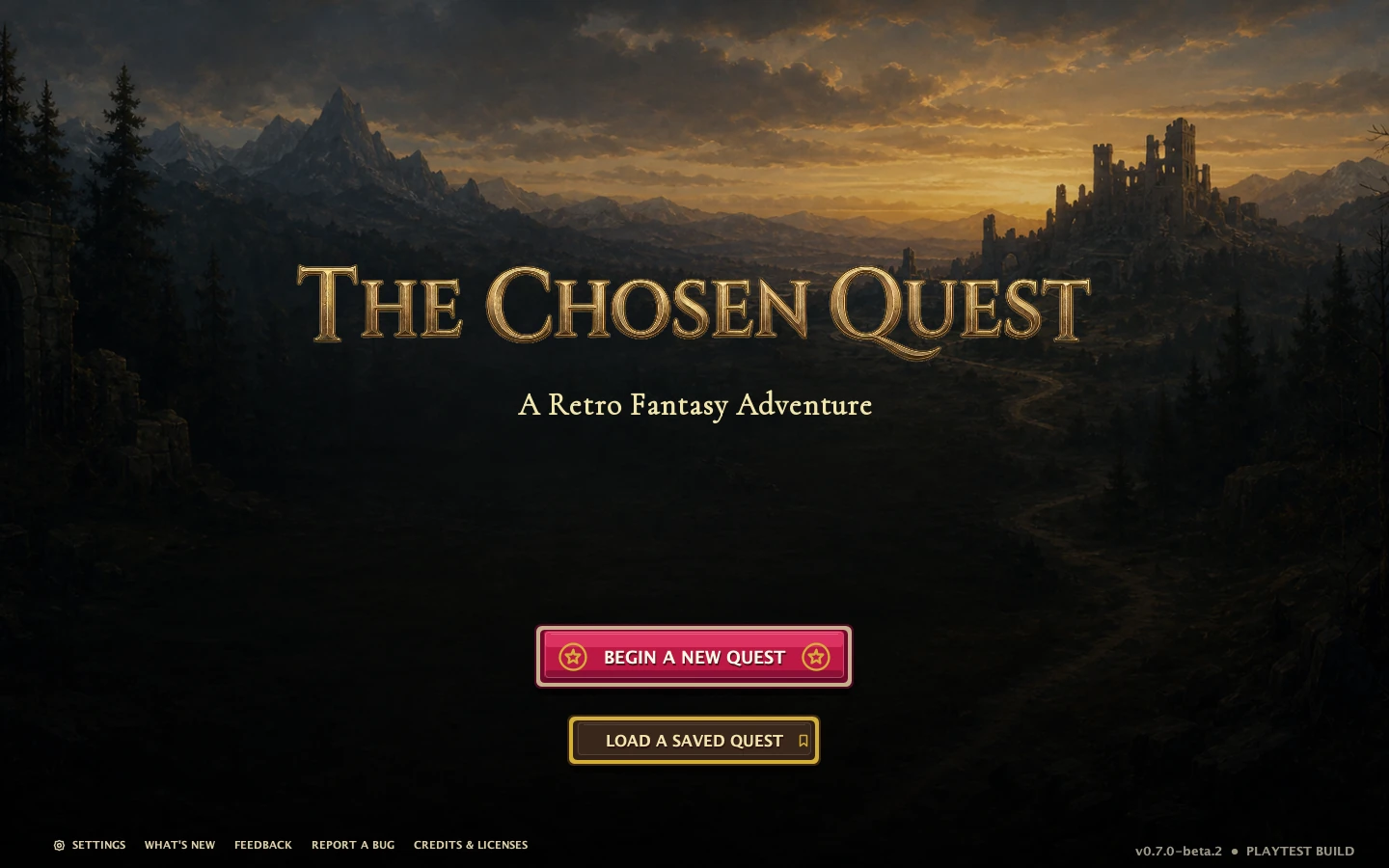
The Chosen Quest began as a classroom console RPG. The Enhanced Edition asks what it takes to turn that foundation into a legible, atmospheric, and dependable desktop product without erasing the character of the original.
Character choices needed to persist into exploration and combat. New artwork needed responsive framing. Gameplay changes needed repeatable validation. The interface, underlying rules, and review process had to evolve together.
- 01
Make the game easier to understand and operate.
- 02
Give the experience a recognizable visual identity.
- 03
Improve functionality without losing testable behavior.
02 / The collaboration model
AI increased execution capacity. Judgment stayed human.
Plausible output was never treated as finished output. Every change moved through a repeatable direction, implementation, and review loop.
AI assisted with codebase analysis, option generation, implementation, test coverage, documentation, and selected visual production. I retained responsibility for the product intent: defining constraints, choosing tradeoffs, reviewing results, and deciding what was ready to keep.
- 01Audit
- 02Define constraints
- 03Explore options
- 04Choose a direction
- 05Implement
- 06Render & test
- 07Review
- 08Refine
03 / Character system
One system, not sixteen unrelated screens.
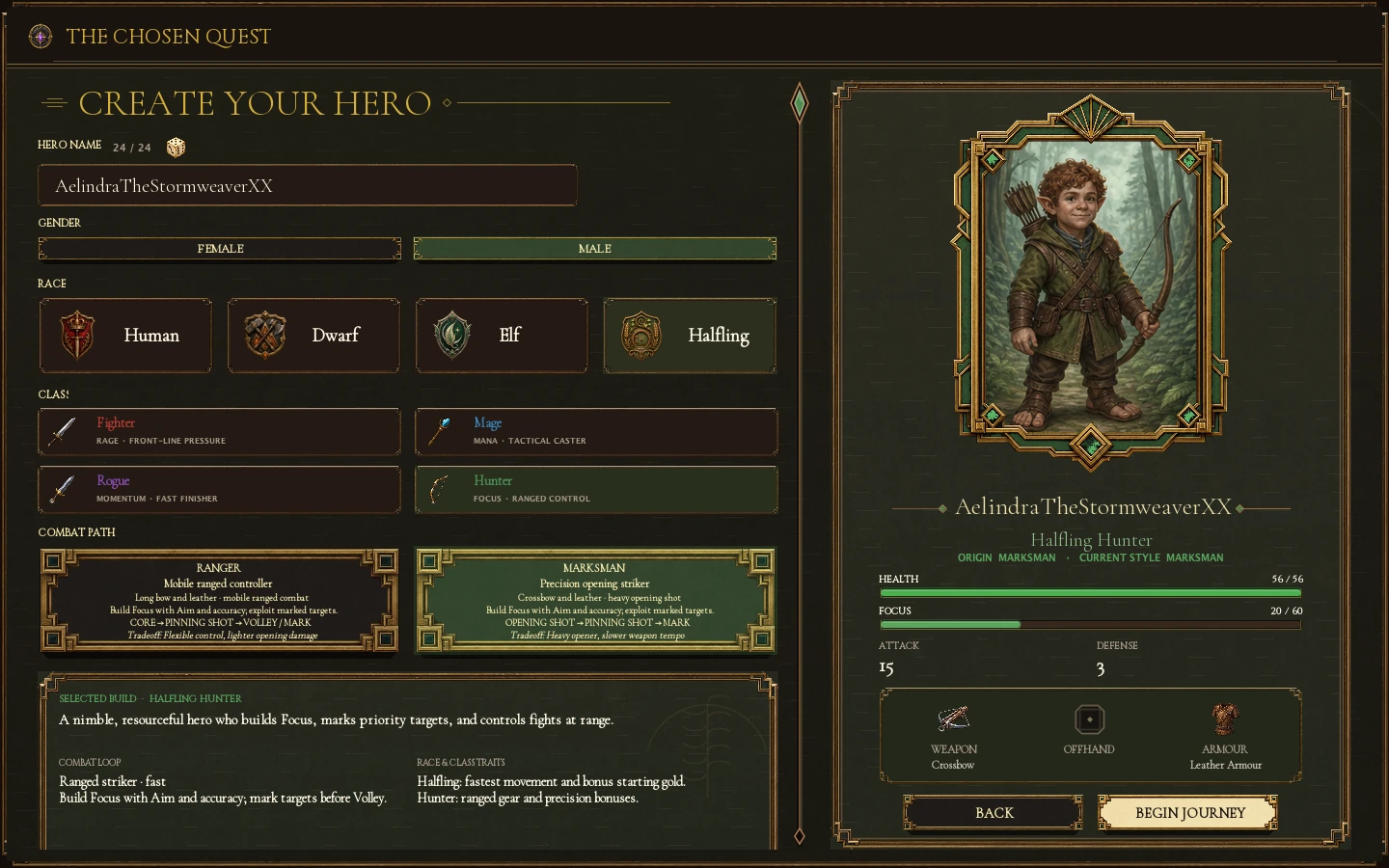
A neutral charcoal, parchment, and antique-gold shell holds stable geometry while class color and race heraldry behave as modular identity layers.
The interface supports four races and four classes without sacrificing interaction states, contrast, or readability. Class identity leads; race ornament stays quieter; functional colors keep their established meanings.
04 / Gameplay systems
Turning class choice into a play style.
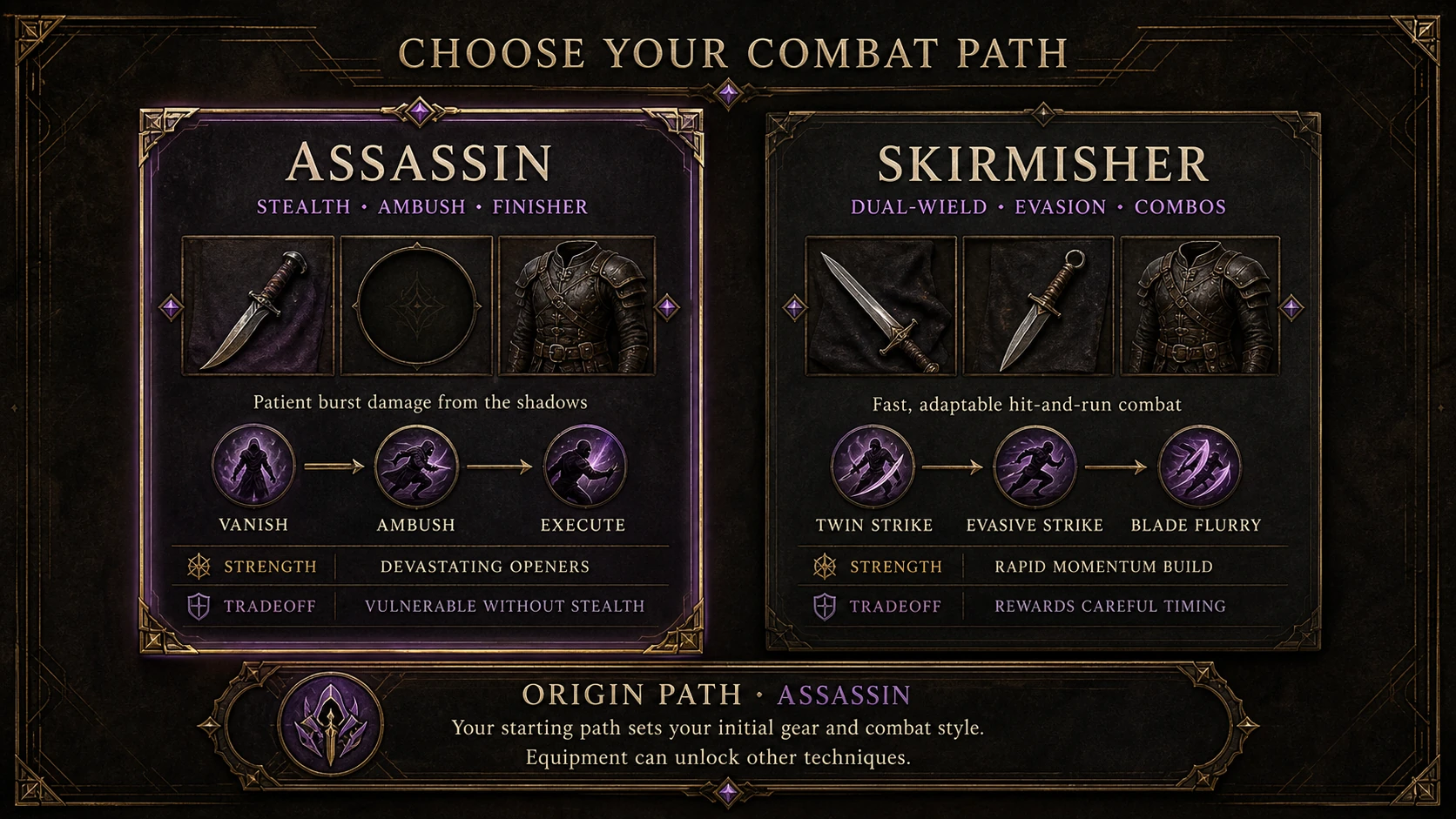
Combat Paths give each class two readable starting approaches while equipment can later unlock a different current style.
The Rogue exploration established the model: compare equipment, action sequence, strength, and tradeoff instead of relying on flavor text alone. The player's origin remains visible even as their equipment changes.
05 / Quality process
Making polish testable.
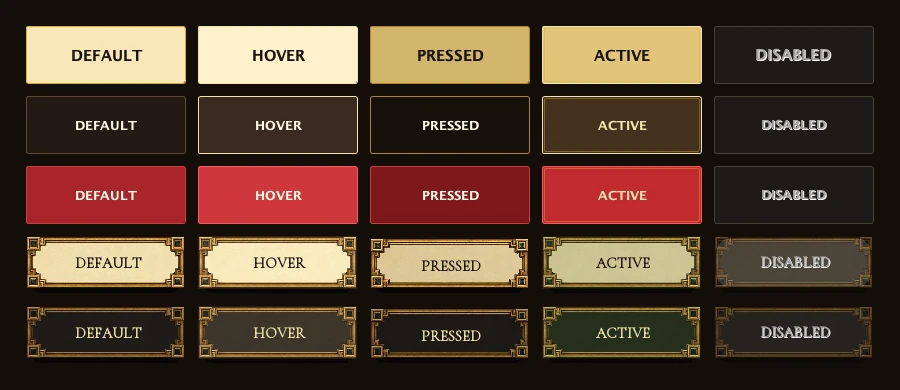
A change was not complete because one screenshot looked right. It had to survive representative content, interaction states, target compositions, and gameplay behavior.
Render checks cover representative screens and control states; deterministic simulations exercise combat builds; structured playtesting turns observations into durable backlog work. This separates visual confidence from behavioral confidence while requiring both.
06 / Current experience
A connected fantasy interface.
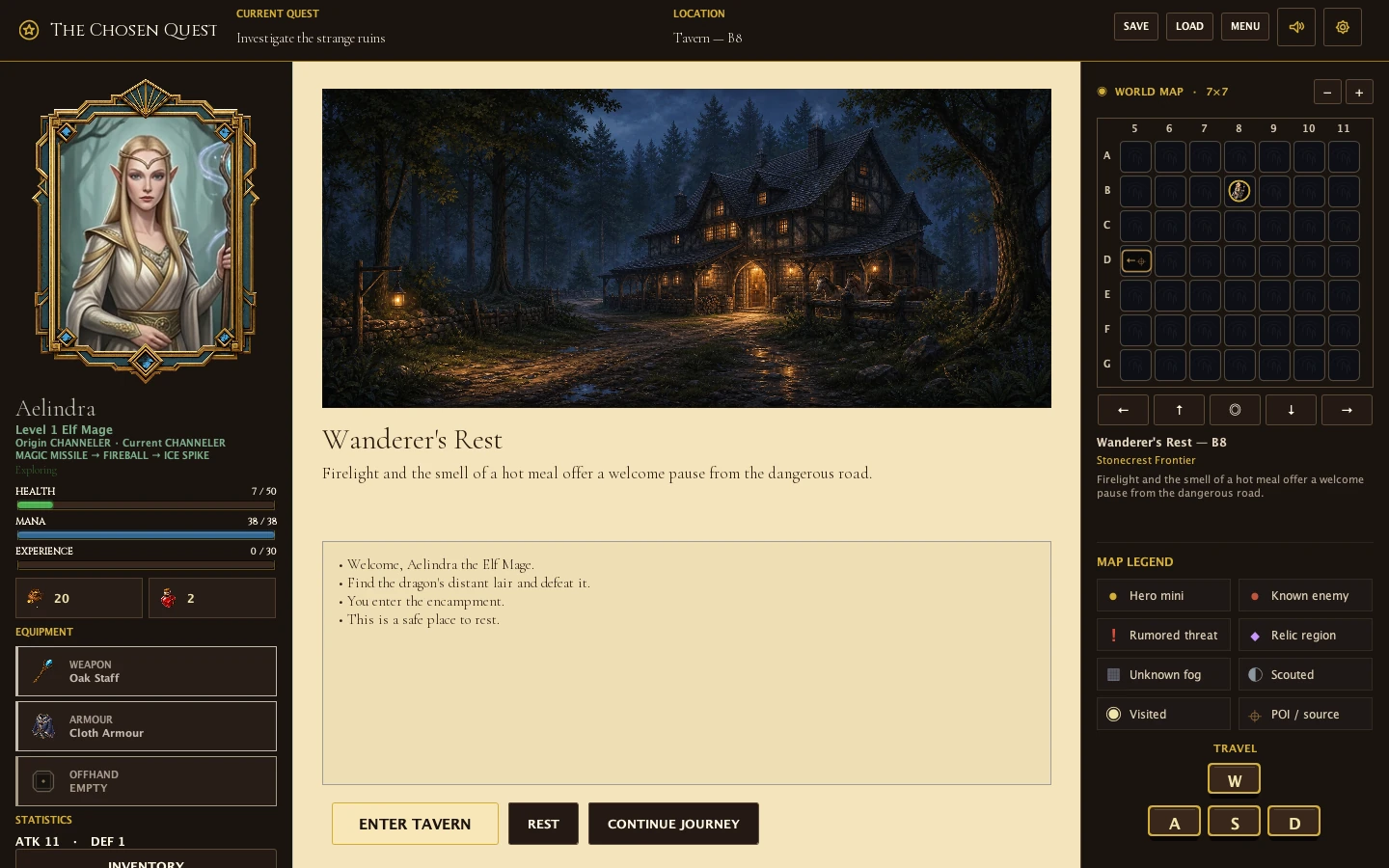
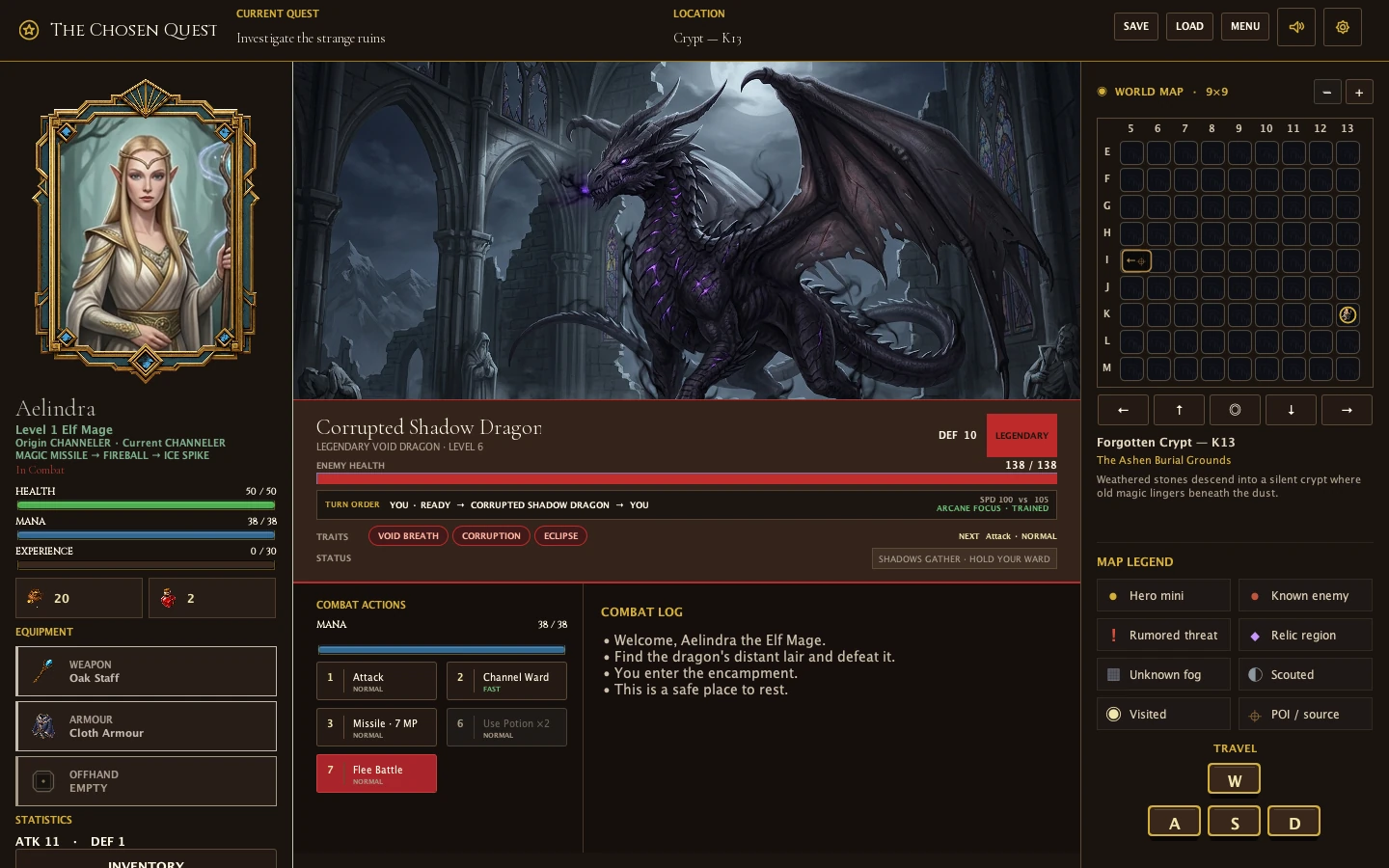
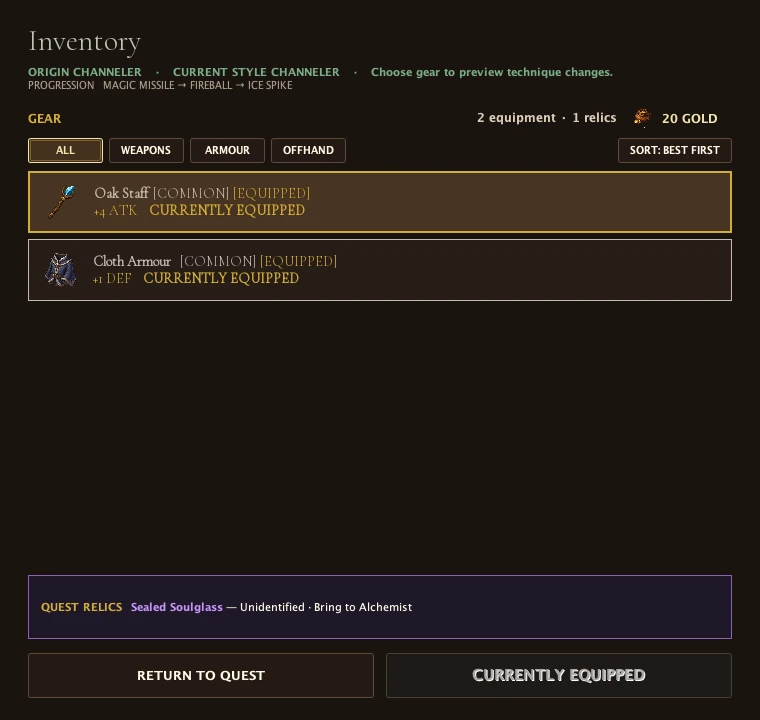
The current private beta brings character state, exploration, encounters, combat, inventory, commerce, save/load, audio, and release preparation into one visual system.
Reflection
Intent, implementation, evidence, revision.
The most important artifact is not a single generated screen or feature. It is the process that connects those four things.
AI accelerated analysis and implementation, but it did not decide what made the product coherent. Strong constraints, durable documentation, automated checks, screenshots, and playtesting each caught a different class of problem.
Playable browser comparison
Separate Original and Enhanced editions are being prepared for a guided comparison. They will remain unavailable until loading, input, save/reset, and responsive behavior are validated.
Browser editions in development