Independent product case study · Working v1.0
Native macOS product · 2026
ApplyKit
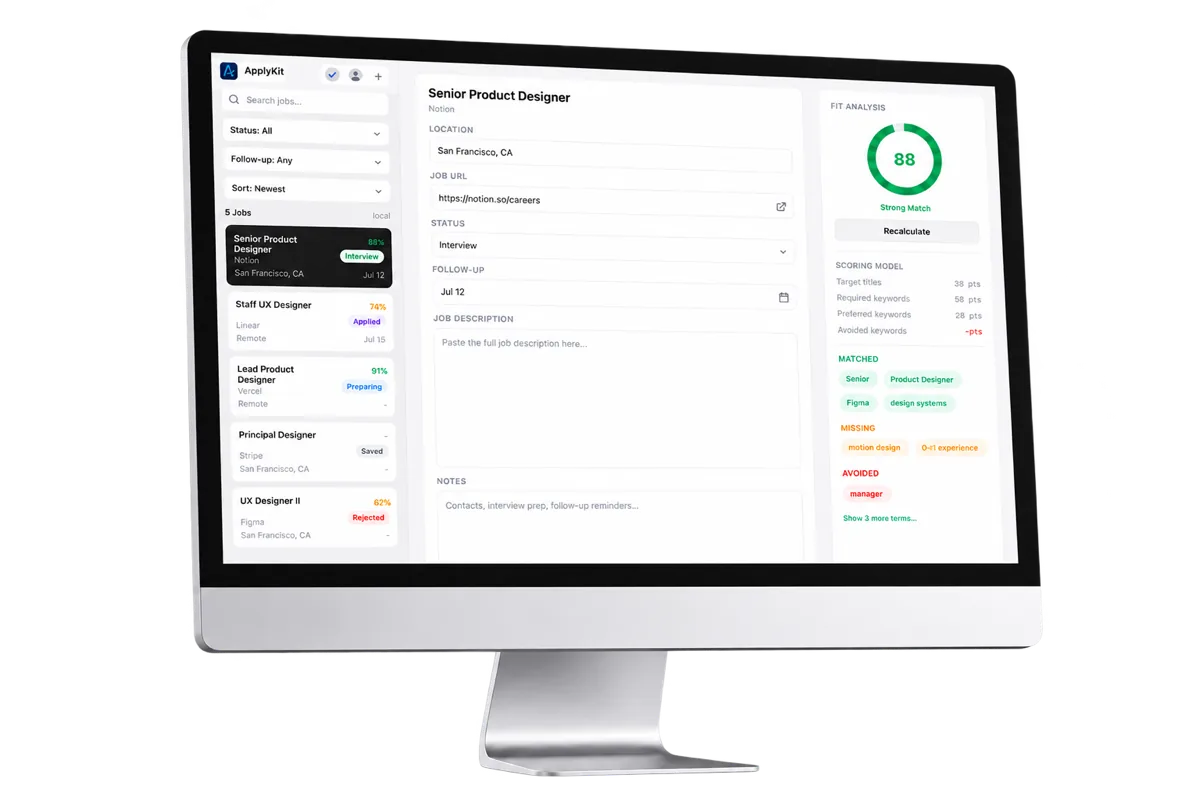
Turning a fragmented job search into a calm, local-first workflow. Designed and built to organize applications, explain role fit, and keep the next decision visible.
01 / Overview
One place for the evidence and the next action.
A serious job search rarely lives in one place. Listings collect in tabs, status updates drift into spreadsheets, and the reason one role looked promising gets harder to recover.
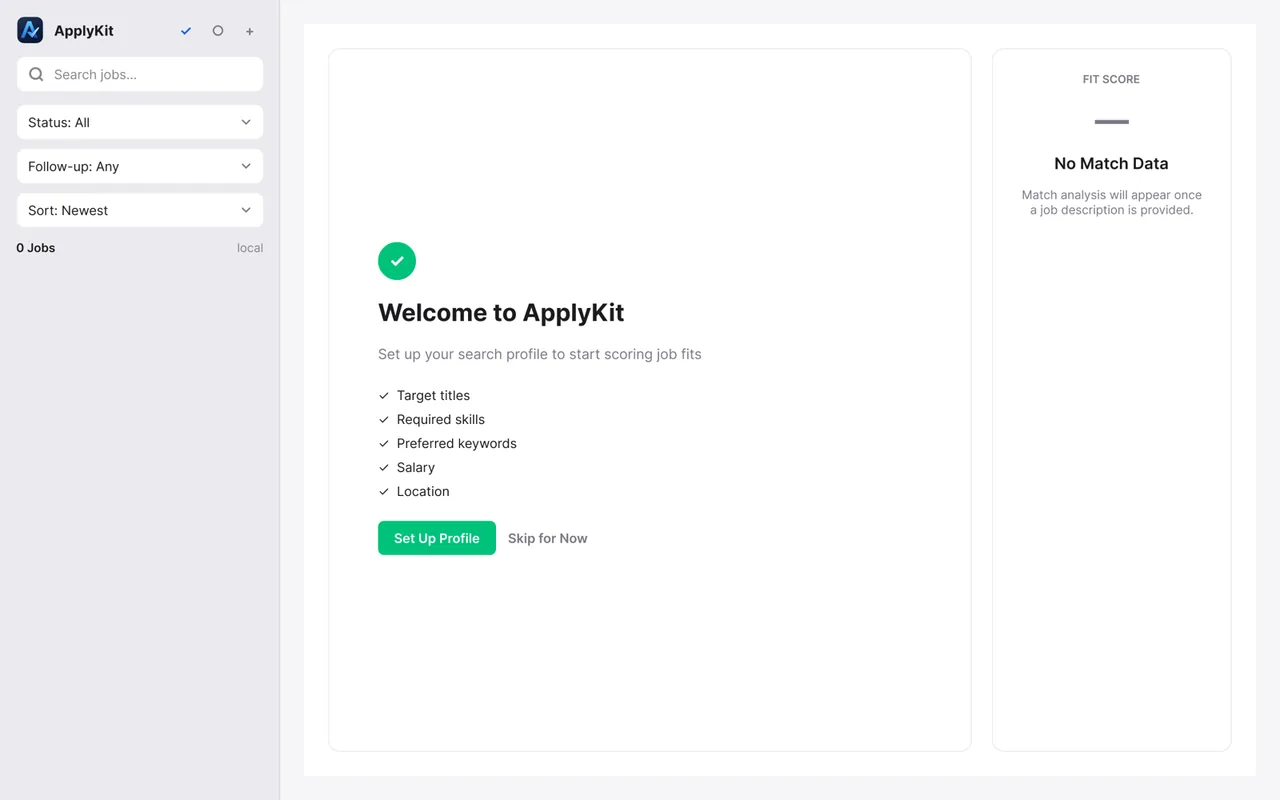
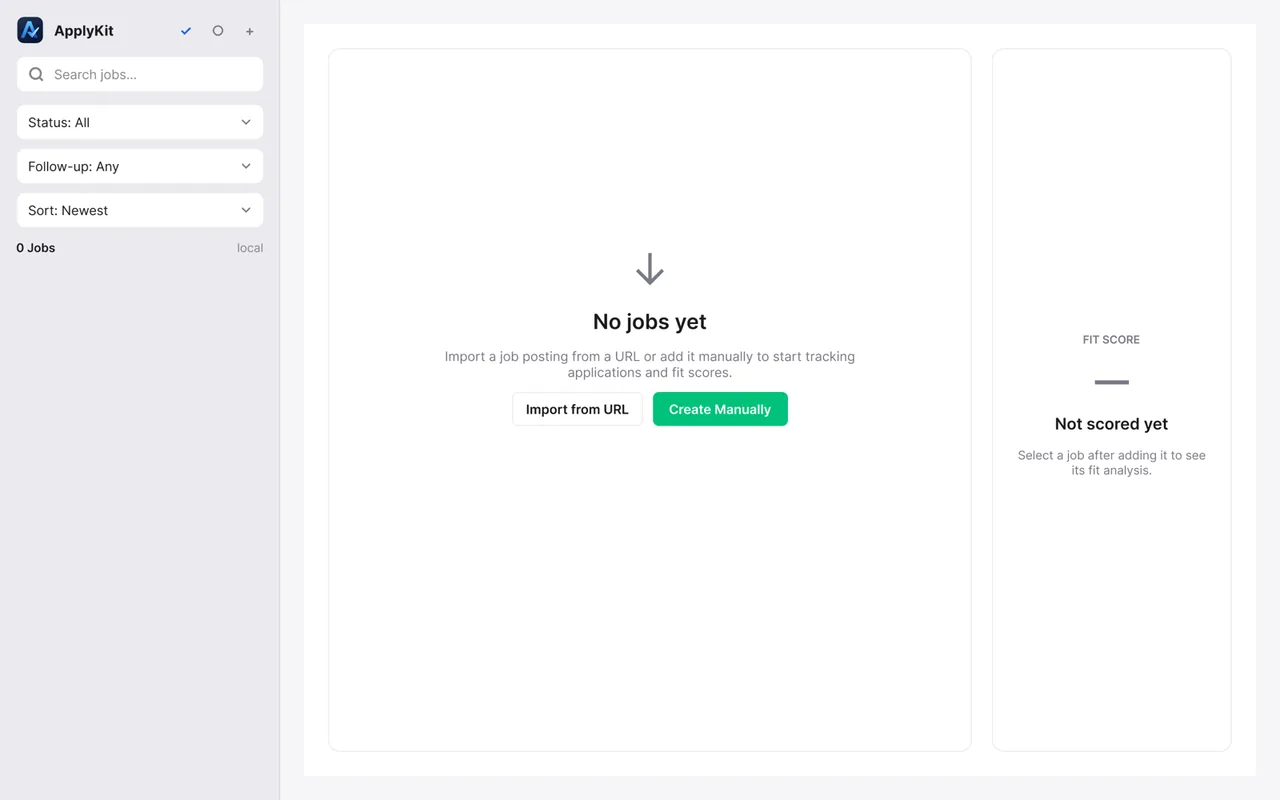
ApplyKit brings saved roles, application state, descriptions, fit evidence, notes, follow-ups, and interview details into one native desktop workspace, without making a hosted account the center of the experience.
- 01
Calm by defaultShow the next decision without turning the search into a dashboard of noise.
- 02
Local by designKeep the core tracker and search profile in readable files on the user’s Mac.
- 03
Explain the scoreSurface the evidence behind role fit instead of presenting an opaque ranking.
02 / Explainable fit
A score that shows its work.
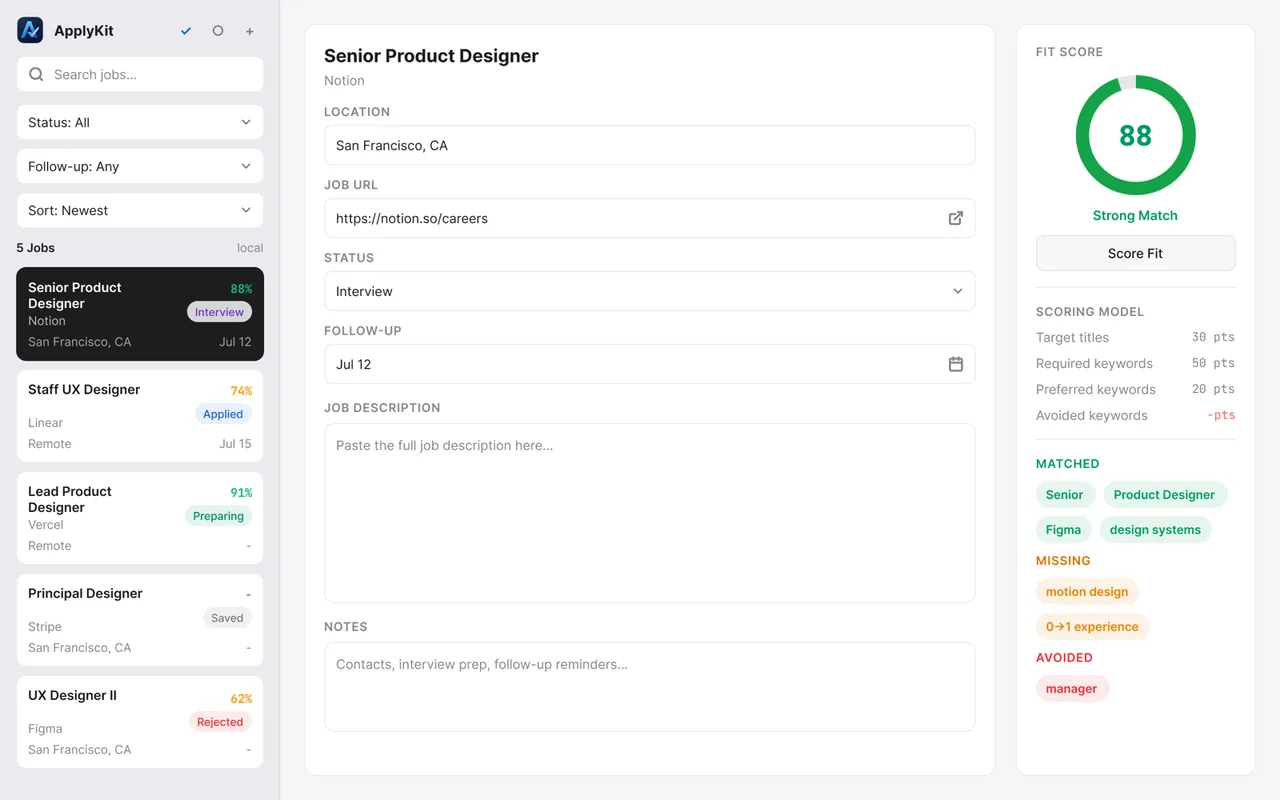
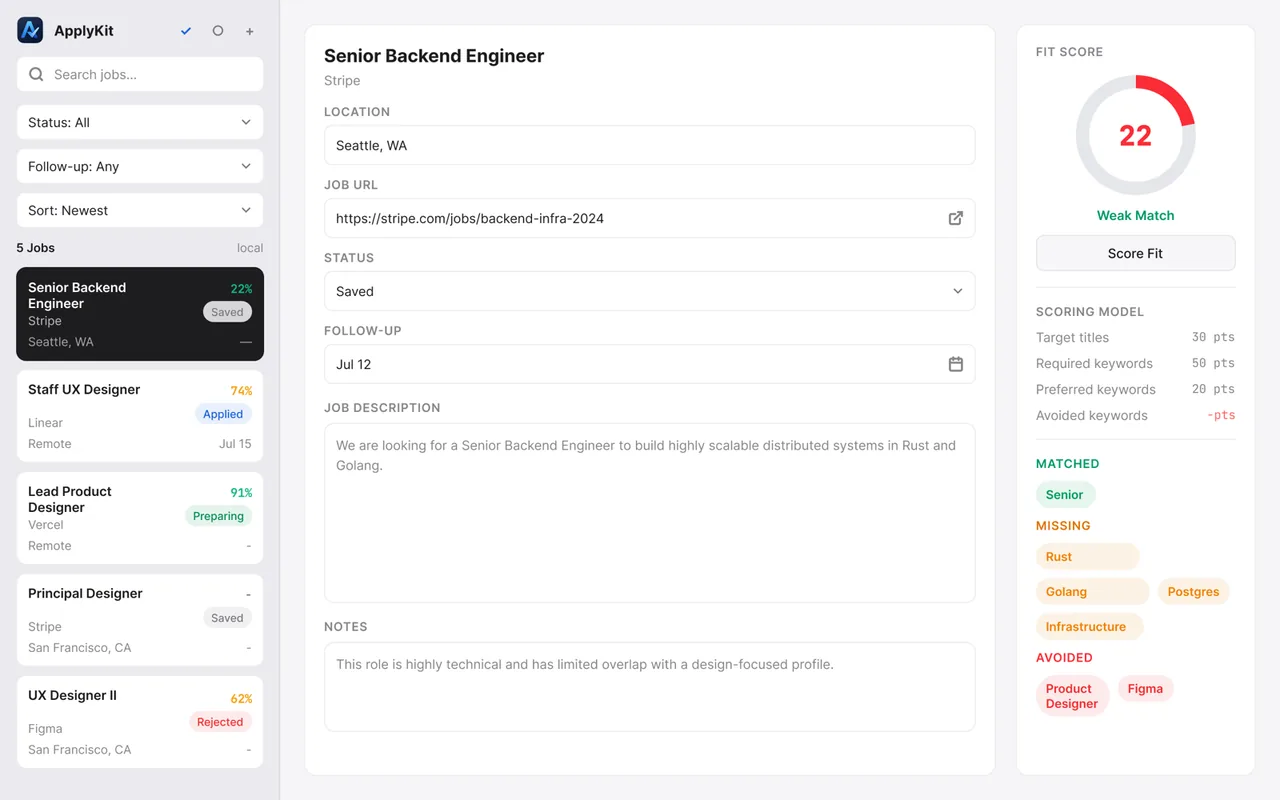
Fit scores create false confidence when their inputs are hidden. ApplyKit uses a deterministic model built from the user’s own priorities.
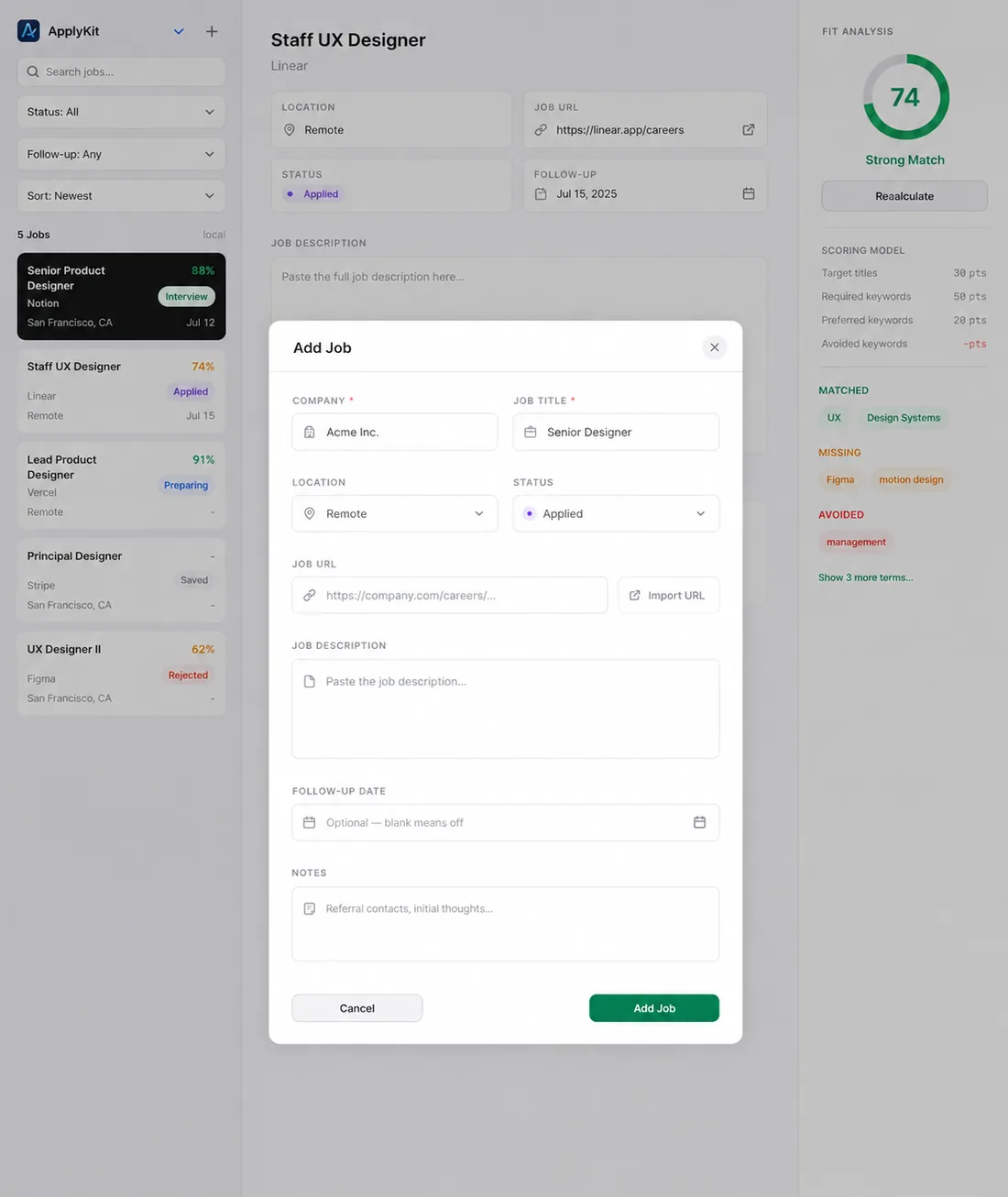
Target titles contribute 30 points, required terms 50, and preferred terms 20. Avoided terms subtract 10 points each, capped at 30. Matched, missing, and avoided terms stay visible so the score can be questioned.
03 / Search profile
Make the model personal and inspectable.
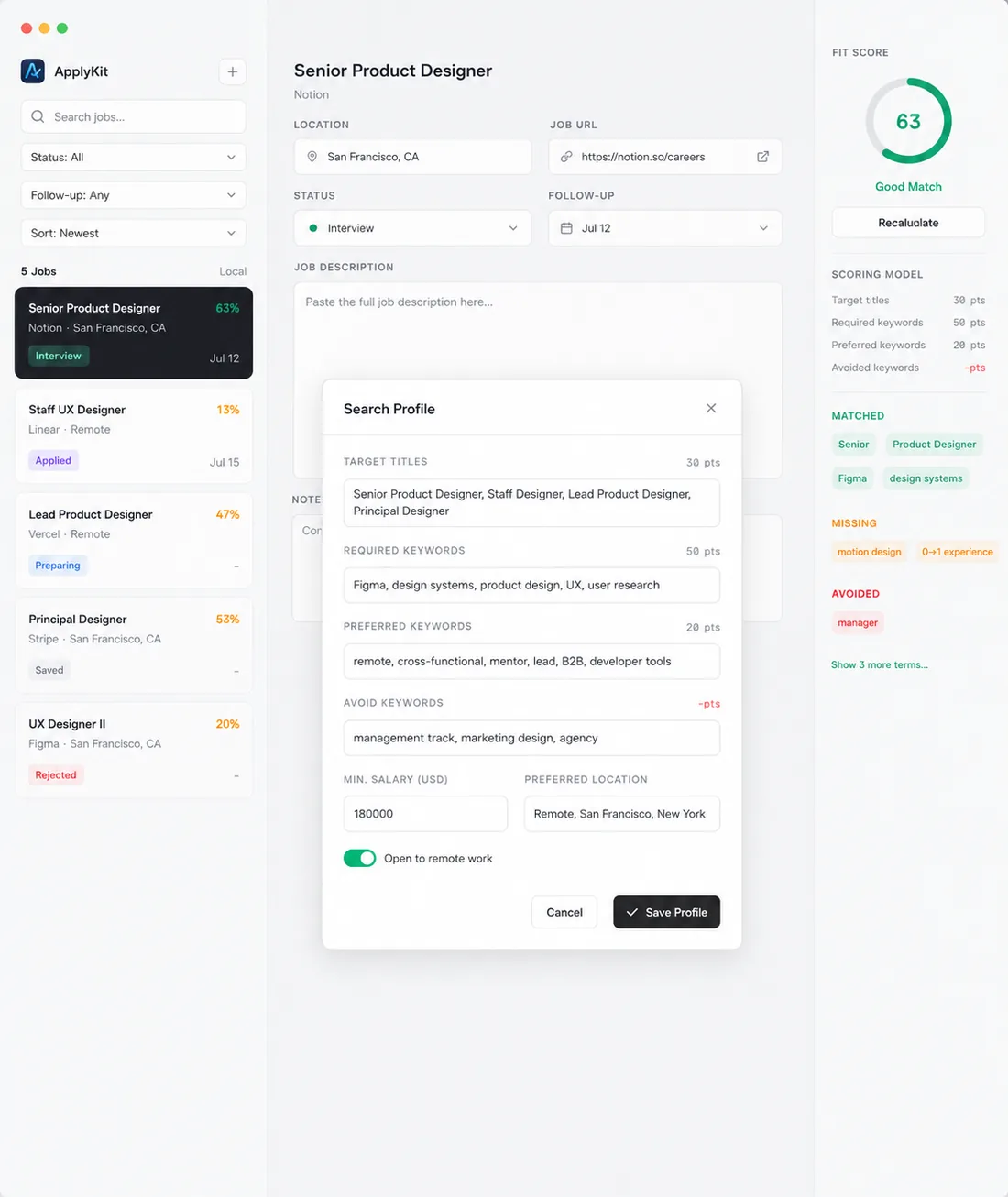
The profile turns general matching into an explicit set of priorities.
Titles and three groups of terms can be edited alongside salary, location, and remote preferences. The result supports judgment instead of pretending to replace it.
04 / Stage-aware workflow
Reveal interview tools when they become useful.
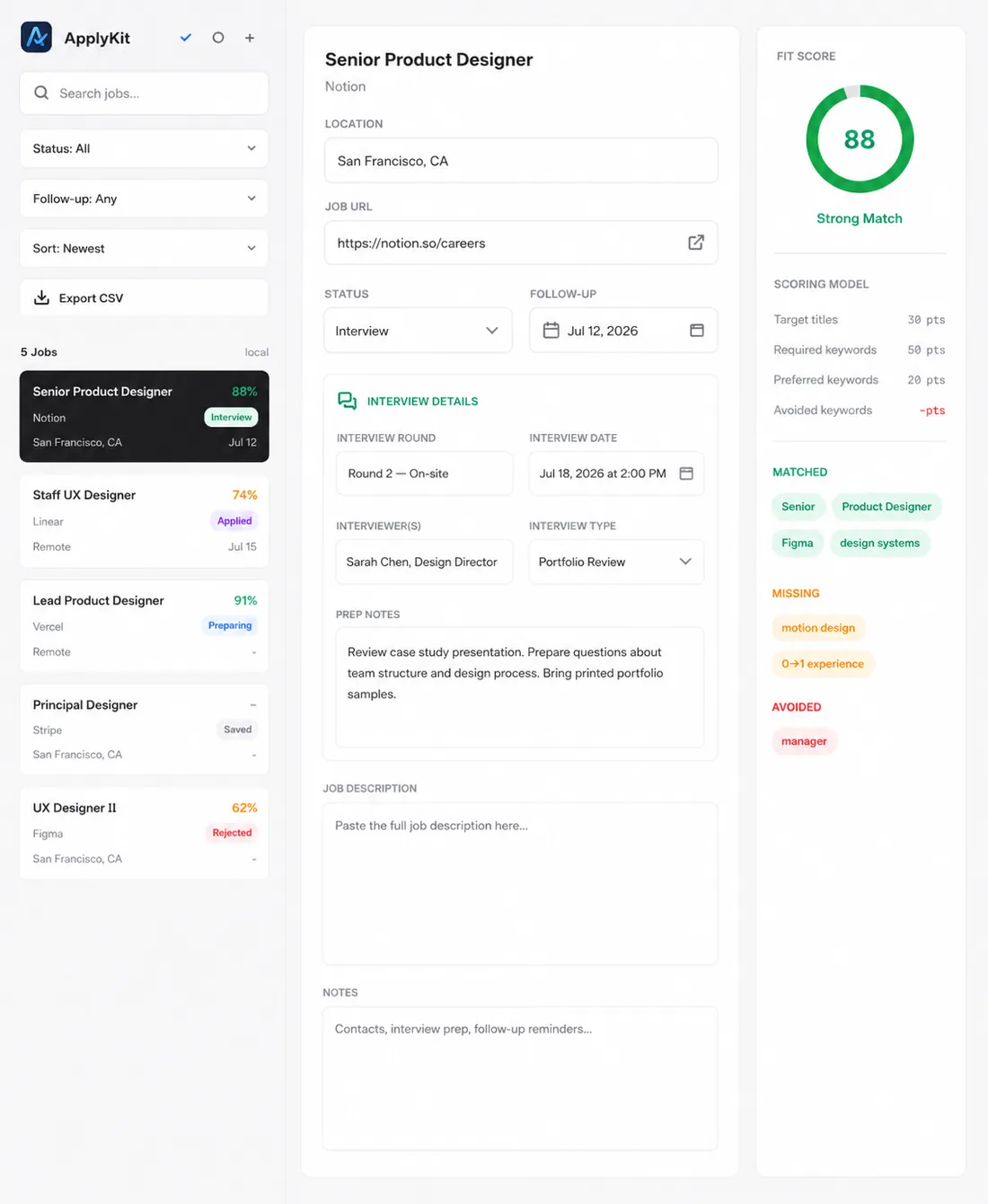
Moving into an interview changes the information a person needs to see.
Round, date and time, interviewers, interview type, and preparation notes appear in the job context at that stage. Follow-up and interview reminders remain attached to the same underlying record.
05 / Scale & portability
Start anywhere. Keep an exit path.
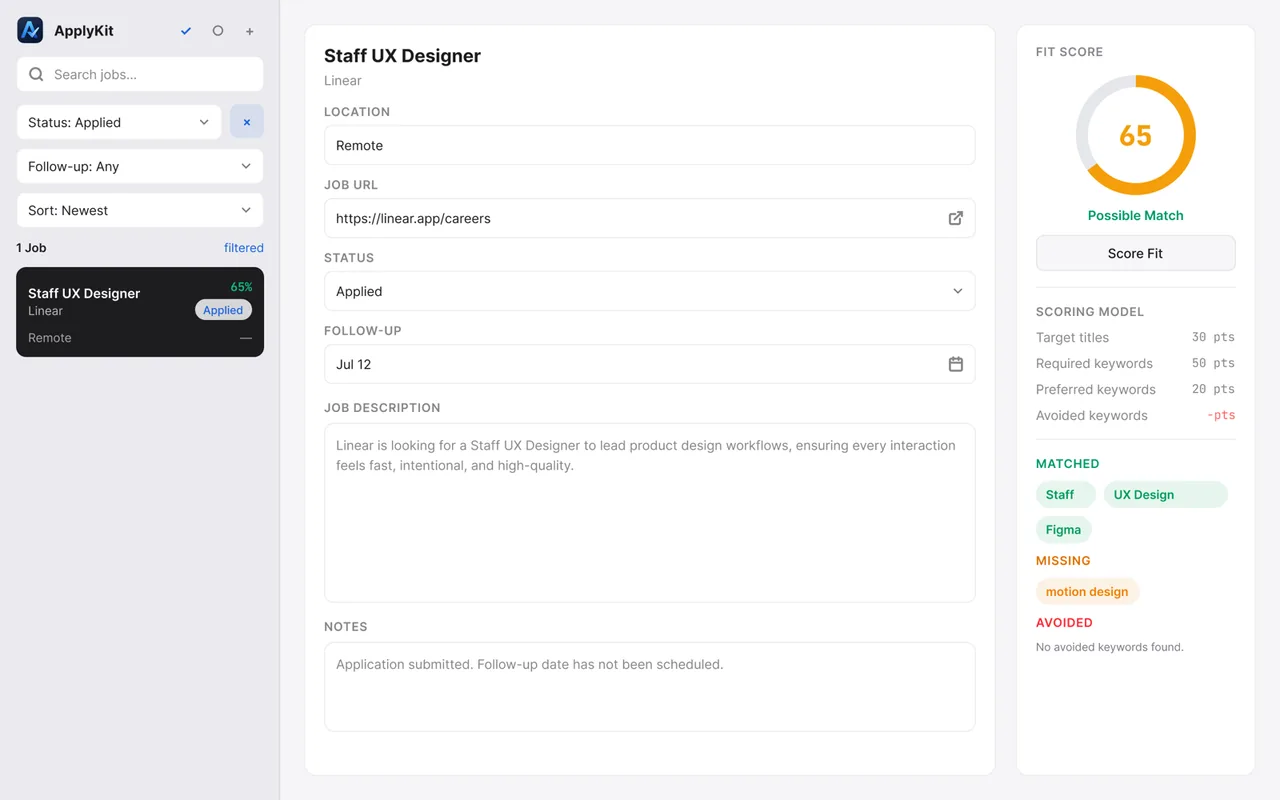
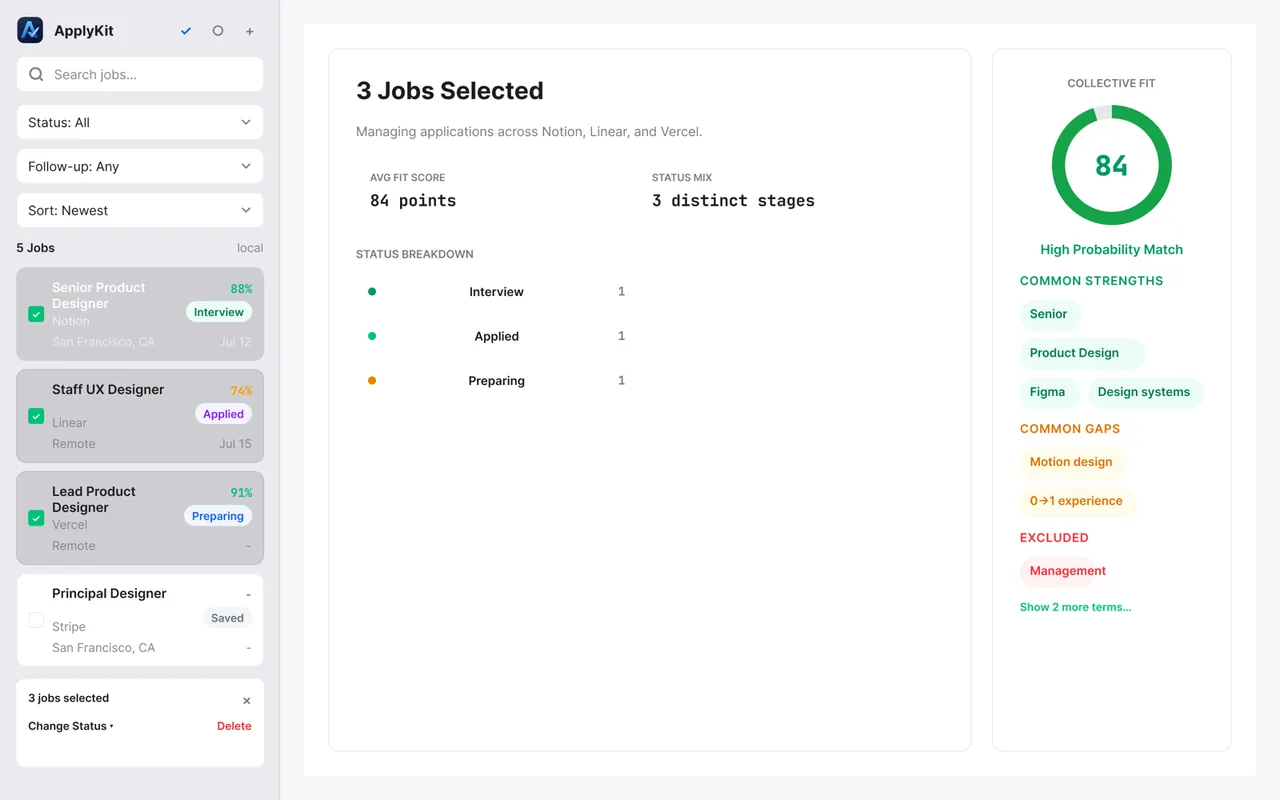
Status filters keep the working list focused. Manual and URL-based entry support new roles, while CSV and TSV import, duplicate handling, bulk status changes, CSV export, and JSON backup help an existing search move in, and let the data move back out.
Reflection
Clarity, explanation, ownership.
ApplyKit’s value comes less from adding another job board and more from keeping the evidence and next action for every opportunity intact.
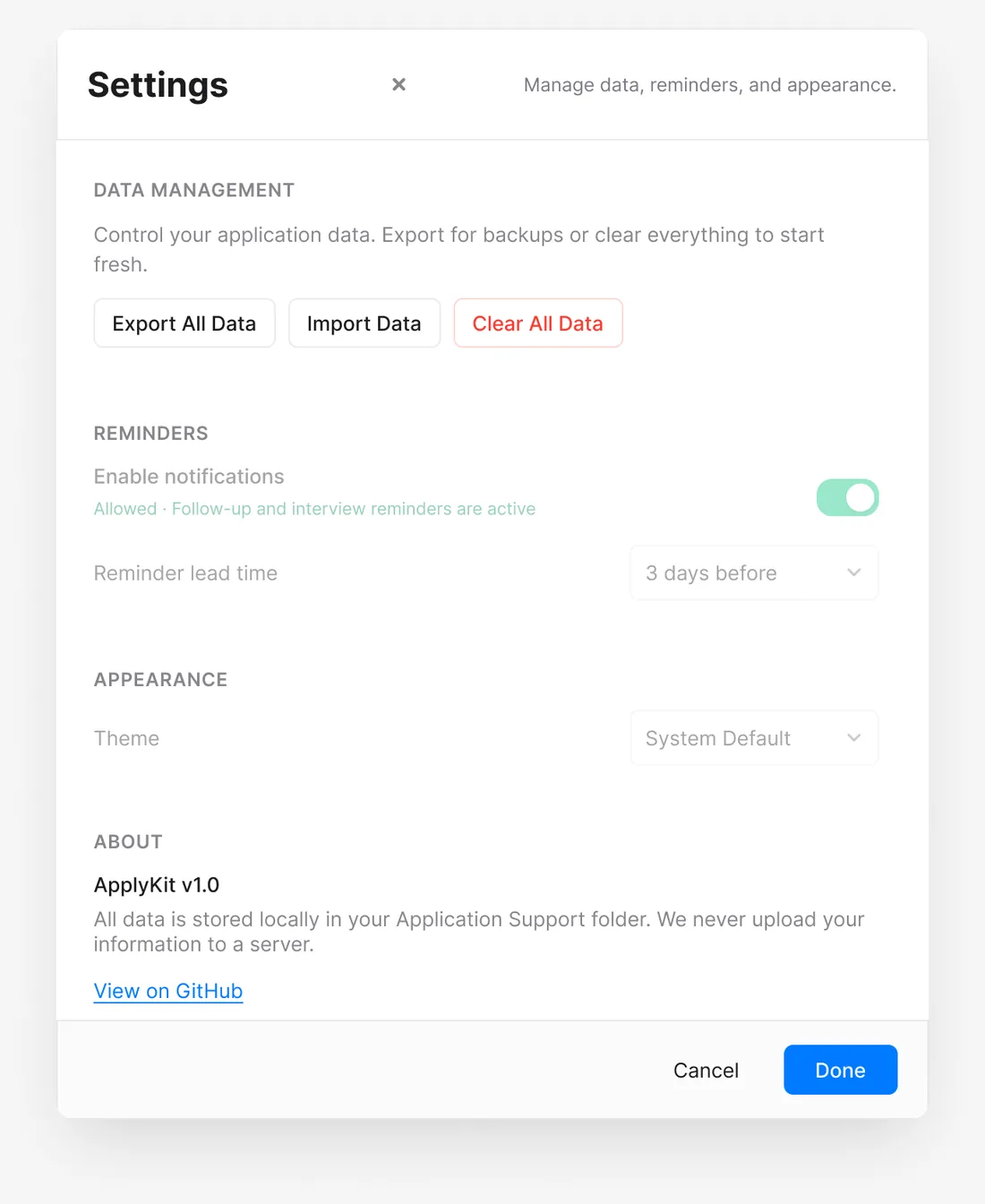
The core tracker uses local Codable JSON rather than a remote database. That choice reduces account and infrastructure complexity while matching the sensitive, personal nature of the work.
Capture the implemented product
Run the current project in full Xcode, replace design-reference screens with sanitized build captures, and verify keyboard and VoiceOver behavior before making broader quality claims.
Evidence first